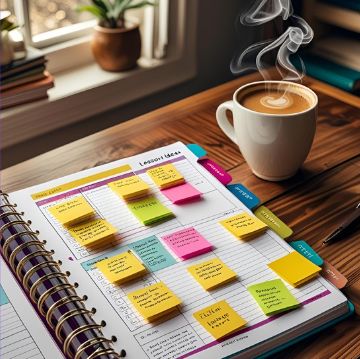
Lesson planning is not just writing down a list of activities. It’s about building a clear, logical sequence where each stage has a purpose and helps learners reach the lesson aim. When stages connect smoothly, the lesson becomes more focused, more engaging, and more effective.
As a CELTA trainer, I often see trainees struggle with this. They tend to see planning as choosing a set of tasks, but not always thinking about why each stage is there, or how one stage prepares learners for the next. A well-planned lesson is more than the sum of its parts – each stage supports the aim, and a weak stage can affect the success of the whole lesson.
A quick anecdote:
I once observed a trainee delivering a listening lesson. The aim was for learners to practise listening for gist and specific information. During the pre-teaching vocabulary stage, the trainee pre-taught six words – carefully selected, nicely elicited, and checked for understanding. But when the listening task began, even though the words were in the audio, they were not relevant to unblock key vocabulary learners needed to complete the listening task, and they weren’t connected to the main aim either. The learners were confused: they’d spent time on language that gave them no support for the task.
In feedback, the trainee realised that the vocabulary had been chosen simply because it “seemed useful” – but it wasn’t linked to the actual task. She didn’t have the chance to teach the same lesson again, but in another lesson, she followed the feedback and reworked the plan to pre-teach key lexis. The learners were much more confident and successful during the listening. A small change, but a big impact.
Start with your aim, and plan backwards. What do learners need to do by the end? What steps will help them get there? This helps ensure each stage is meaningful – not just something to fill time.
Penny Ur (1996) emphasises that a good lesson plan has clear objectives and logical progression. For her, planning is not only about the teacher feeling organised, but about making sure that the lesson is accessible and useful for the learners. A practical approach: break the lesson into manageable parts, and make sure each one brings learners closer to the goal.
Tessa Woodward (2001), in her book Planning Lessons and Courses, highlights how planning helps us “notice what we do,” so we can make more conscious choices in the classroom. She also introduces the idea of planning with variety, pace, and challenge in mind, reminding us that planning is not just about content – it’s about learner experience.
Tip: After writing your plan, go through each stage and ask yourself:
* “How does this stage connect to the next?”
* “Does this help achieve the aim?”
If unsure, rethink or adapt it. Purposeful planning leads to confident teaching and better learning.


Leave a Reply