What dogs can teach us about student behaviour
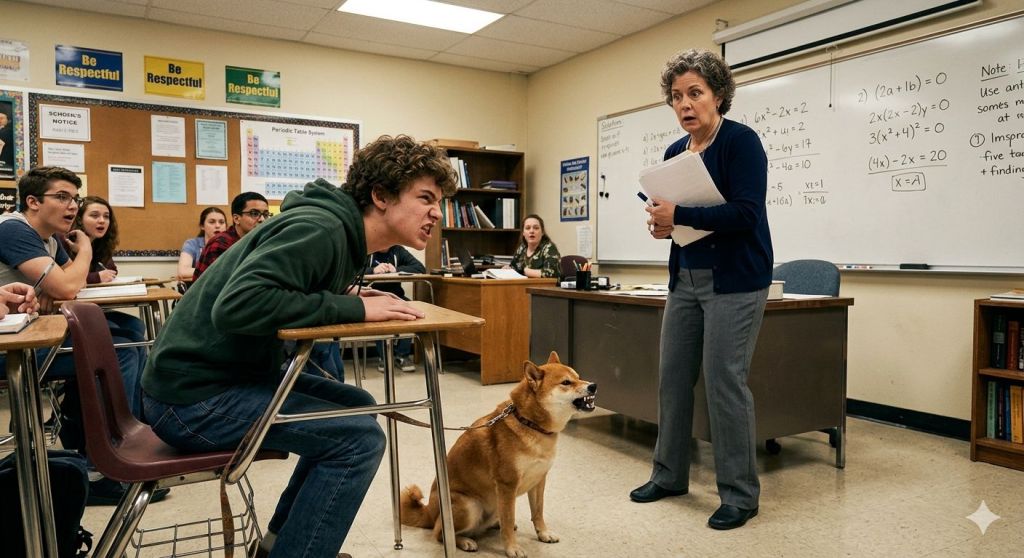
I recently came across a simple idea about dog behaviour that lingered longer than I expected:
Growling is not aggression – it’s early communication.
Dogs don’t growl to escalate a situation. They growl to prevent escalation. It’s a signal: something isn’t right. And when that signal is ignored or punished, the warning disappears… leaving only the possibility of a bite.
It’s a compelling reminder that behaviour is often less about reaction and more about communication.
And once you see it, it’s hard not to notice the parallel in our classrooms.
Students “growl” too
Not literally, of course. But they send signals (subtle and not-so-subtle) that something isn’t working for them.
What we often label as “problem behaviour” can actually be an early warning system.
That “growl” might be saying:
- I don’t understand what’s going on.
- This feels overwhelming.
- I’m uncomfortable speaking in front of others.
- I need more time to process this.
- I don’t want to lose face.
- I’m tired, distracted, or not fully here today.
- I’ve struggled with this before – and I’m expecting to fail again.
These aren’t acts of defiance. They’re expressions of experience.
The problem isn’t the signal — it’s how we respond
In many classrooms, these signals are easy to misread.
We might:
- shut the behaviour down
- label the student (“unmotivated”, “difficult”)
- push ahead with the lesson regardless
- ignore what’s happening beneath the surface
In other words, we do exactly what the dog analogy warns against: we silence the growl.
And when early communication doesn’t work, escalation becomes more likely.
In classroom terms, that “bite” can look like:
- withdrawal or complete disengagement
- refusal to participate
- disruptive behaviour
- absenteeism
By the time we’re dealing with these, the original message has already been missed.
Behaviour as communication, not compliance
If we shift our perspective, behaviour stops being something to control and becomes something to interpret.
That doesn’t mean lowering expectations or avoiding challenge. It means recognising that learning is relational, emotional, and deeply human.
Instead of reacting, we can get curious:
- What might this student be experiencing right now?
- What need is not being met?
- What can I adjust – the task, the pace, the level of support, the interaction pattern?
These are small questions, but they open up more responsive teaching.
Listening early changes everything
The key insight is simple, but powerful:
- Behaviour is not the problem.
- It’s information about the problem.
When we treat early signals as meaningful, rather than inconvenient, we create space for adjustment before escalation.
In other words, if we learn to notice the “growl,” we’re far less likely to encounter the “bite.”
And perhaps more importantly, we build classrooms where students feel seen, not managed.
A quiet shift in mindset
Reframing behaviour as communication doesn’t require a complete overhaul of practice. It starts with a small shift:
From “How do I stop this?”
to “What is this trying to tell me?”
That shift doesn’t just change how we respond.
It changes how students experience learning and how safe they feel taking part in it.
So yes, it’s worth being grateful for the growl.
Because it’s often the first – and best – chance we get to listen.


Leave a Reply