I created two lesson plans around exactly the same topic, trending TV shows and movies, but using two very different approaches.
📌 Lesson 1: Task-Based Learning (TBL)
Students complete an information-gap task using Netflix Top 10 lists to create the ultimate weekend watch line-up. The lesson is built around negotiation, decision-making and justifying opinions, with the language focus emerging after the task.
Task title: The Netflix Curation Challenge
Language focus (post-task): Expressing preferences, making recommendations and justifying opinions (e.g. I’d rather watch…, It appeals to me because…, comparative structures).
Materials:
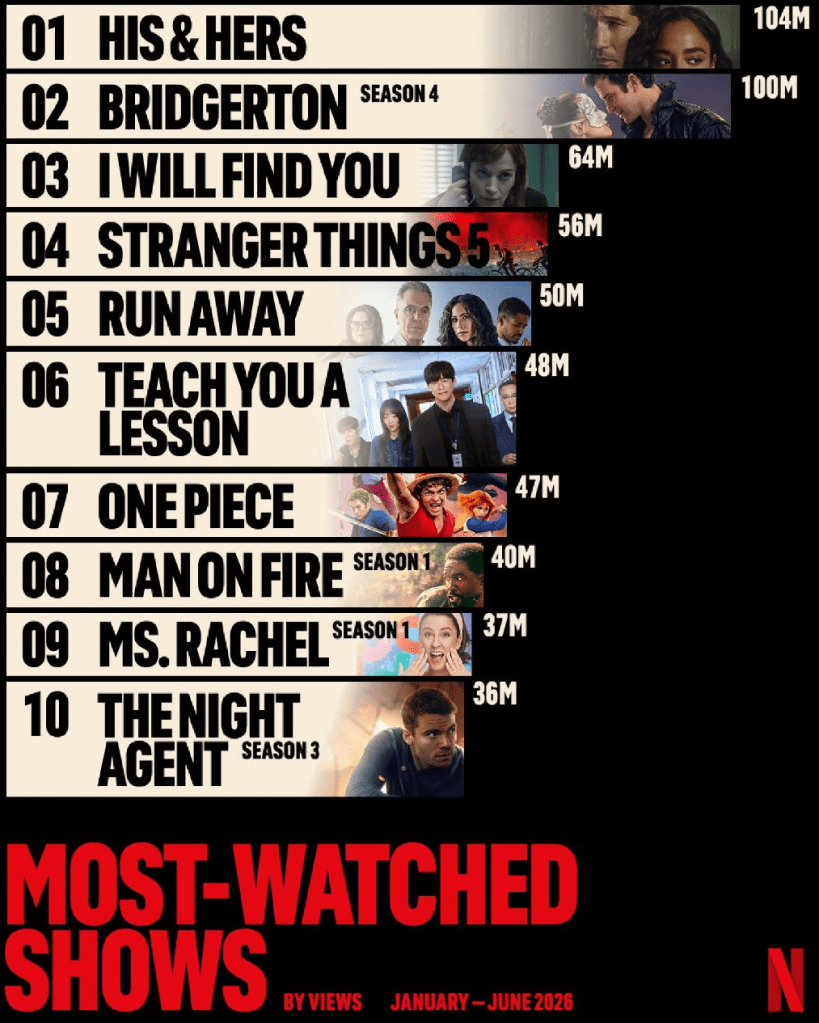
- Image A: Top 10 Most-Watched Netflix Shows
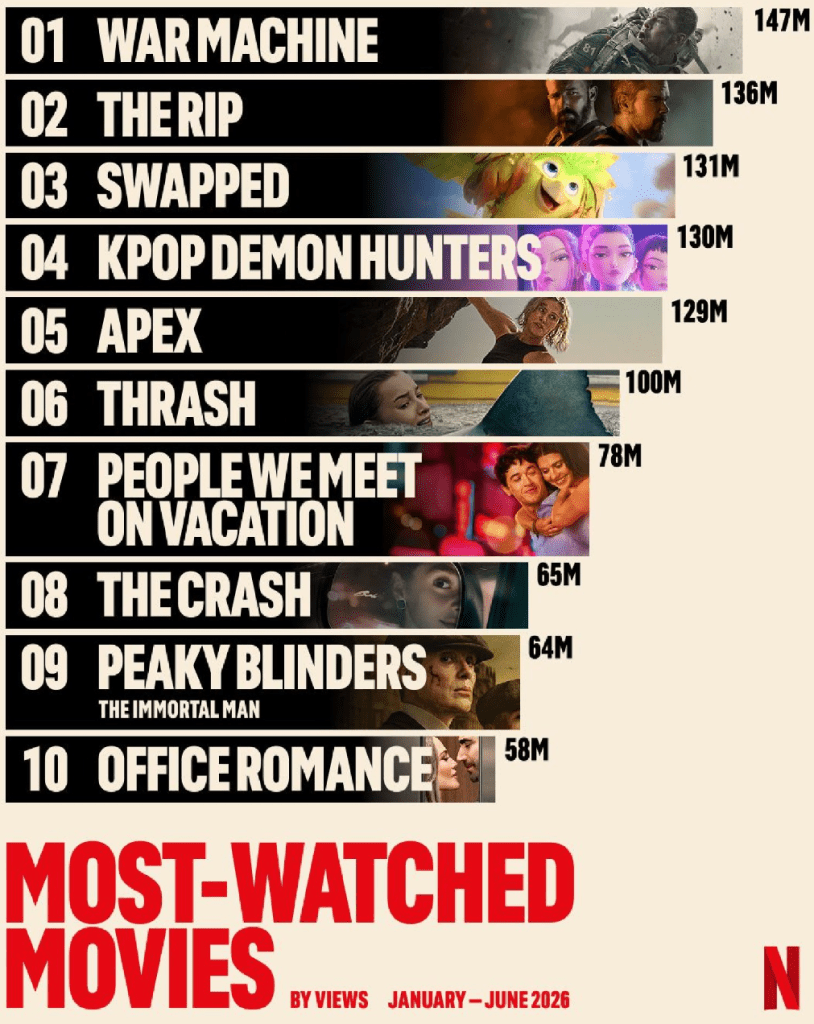
- Image B: Top 10 Most-Watched Netflix Movies
1. Pre-task (10 mins)
Lead-in
Show the Netflix logo and ask:
What’s the last thing you binge-watched?
Students discuss in pairs for a couple of minutes.
Model the task
Display one TV show and one film from the lists (e.g. Bridgerton and War Machine). Have a short conversation with a confident student, comparing the two and deciding which one you’d watch together. Model how to talk about genre, mood, popularity and personal preference.
Set up the task
Divide the class into Partner A and Partner B.
- Partner A receives the Top 10 Shows list.
- Partner B receives the Top 10 Movies list.
Students must not show their list to their partner.
2. Task cycle (25 mins)
Task
Tell students they are roommates organising a weekend watch party for a group of friends with different tastes.
Each student has different information, so they need to describe the titles on their list, including view numbers, genre and anything they can infer from the images.
Their goal is to agree on:
- one TV show
- one film
to create the Ultimate Weekend Watch Line-up.
Encourage them to justify their decisions, especially if they choose something that isn’t the most popular.
For example:
Even though War Machine has 147 million views, we think Swapped would be a better choice because…
Planning
Pairs prepare a one-minute pitch explaining:
- which show and film they chose
- why they didn’t choose the number one titles (His & Hers and War Machine)
- which classmates would enjoy their choices the most
Report
Pairs present their weekend line-up to another pair or to the whole class.
The class then votes for the best-curated watch list.
3. Language Focus (15 mins)
During the task, note examples of useful language as well as common mistakes.
After the reports, highlight language students used for negotiating and justifying opinions, such as:
- We were going to choose…, but we changed our minds because…
- It looks much more engaging than…
- Considering it has 130 million views, it must be…
Briefly reformulate or drill any useful expressions before giving students a short follow-up activity where they use the new language with a different partner.
**********************************************************************************************
📌 Lesson 2: Dogme (Unplugged)
No worksheets. No slides. Just one question on the board to get the conversation started. Students build their own class Top 10 list while the lesson develops from the language and ideas they bring into the room.
Dogme Lesson
1. Conversation starter
Write one question on the board:
What’s the last film or TV show you couldn’t stop watching?
Students discuss it in pairs, explaining:
- what they watched
- why they started watching it
- whether they’d recommend it
While they talk, monitor and collect interesting language, useful expressions and any gaps in vocabulary or grammar.
2. Emergent task: Building our top 10
Bring the class together and ask:
If our class made its own Top 10 Most-Watched list, what would be on it?
Students work in groups of three or four to agree on five titles.
To get a title onto the final list, they have to persuade the rest of the group. The discussion naturally encourages students to justify opinions, disagree politely and negotiate, especially when tastes differ.
3. Language focus
Rather than teaching pre-selected language, use what emerged during the discussions.
Write examples on the board, including both successful language and areas that need improving.
For example, help students upgrade simple comments such as:
- It was really exciting.
to
- It kept me on the edge of my seat.
- It definitely lived up to the hype.
Or highlight useful ways of expressing opinions and disagreement, such as:
- I couldn’t really get into it.
- It’s a bit overrated.
- I’d much rather watch…
4. Language practice
Students change partners and recommend their favourite film or TV show again, this time trying to use some of the new expressions from the board.
Why this works as a Dogme lesson
- No handouts or prepared materials are needed.
- The lesson is driven entirely by students’ own experiences and interests.
- The language focus comes from genuine communicative needs rather than a predetermined grammar point.
- Students revisit the task after feedback, giving them an immediate opportunity to use richer and more accurate language.
**********************************************************************************************
Both lessons aim to develop speaking skills, but they get there in very different ways. One offers more structure and task support, while the other relies on genuine conversation and emergent language.
I’ve shared both lesson plans below.
If you teach B2 or upper-intermediate learners, why not try both with different classes, or even with the same class on different days? I’d love to know:
- Which lesson generated higher quality Student Talking Time (STT)?
- Which lesson felt more natural for your teaching style?
- How did the B2 learners react to having no materials in the Dogme lesson versus having a visual focus in TBL?
📊 Lesson Evaluation Framework
To evaluate which lesson was more effective for your specific group, compare them across these key dimensions:
| Criterion | Task-Based Learning (TBL) | Dogme (Unplugged) |
| Student Engagement | Did the visual task (Netflix graphic) spark curiosity, or did it feel slightly artificial? | Did the open-ended topic increase personal investment, or did some students struggle without visual prompts? |
| Communicative Output | Did students speak continuously to solve the info gap, or did they just read numbers off the image? | Was the conversation fluent and spontaneous, or did quieter students get left out without a structured task? |
| Language Focus | Was the target language (justifying/recommending) used naturally during the task? | Was the emergent language captured from their spontaneous talk useful and relevant for B2 level? |
| Teacher Role | Did you successfully act as a monitor/facilitator during the Task Cycle? | How effectively did you capture and board emergent language on the spot without interrupting flow? |


Leave a Reply