I’ve been noticing something lately.
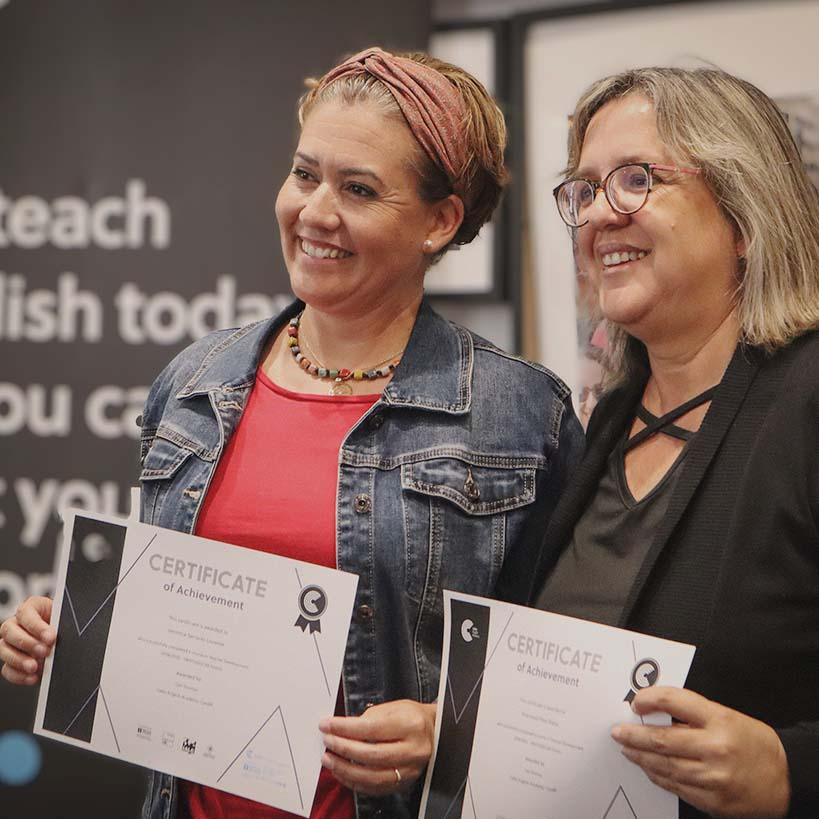
Someone finishes their CELTA, posts the certificate (fair enough, it’s a big achievement), and almost immediately the conversation turns to “What’s next?” DELTA. Another course. The next qualification.
And honestly, I get it. That energy – the motivation to keep going, to keep improving – is something I genuinely admire. It’s one of the things that makes teaching such a dynamic profession.
But part of me always thinks: just give it a minute.
The CELTA doesn’t end when the course finishes
CELTA is intense. Four weeks (or part-time equivalent) of input, planning, teaching, feedback, and constant cognitive overload. You learn a huge amount in a very short space of time.
But here’s the thing: a lot of that learning is still… unfinished.
Not because the course is lacking – quite the opposite. It’s because much of what CELTA introduces only really starts to make sense when you’re back in a real classroom, teaching week after week, without a tutor looking over your shoulder.
That’s when ideas stop being theoretical and start becoming practical:
- Lesson frameworks meet real learners
- Timings fall apart (and you learn to recover)
- Activities don’t land the way you expected
- Students respond in ways you didn’t anticipate
And slowly, things begin to click.
Even experienced teachers need time to recalibrate
For those who come into CELTA with teaching experience, the effect is slightly different – but just as significant.
CELTA doesn’t just add knowledge. It often reshapes it.
It gives you:
- a clearer language to describe what you’re doing
- a more principled approach to lesson design
- new ways of thinking about interaction, feedback, and language
But that kind of shift isn’t immediate. It takes time to integrate. Time to test. Time to question.
Time to feel slightly uncomfortable, if we’re being honest.
Where real development actually happens
There’s a simple cycle at the heart of professional growth:
experience → reflection → adjustment → re-experience
That’s where the depth comes from.
Not from collecting input alone, but from working with it:
- trying something out and seeing it fail
- figuring out why it didn’t work
- tweaking it and trying again
- noticing what changes
It’s messy. It’s inconsistent. It doesn’t always feel like progress.
But it’s real learning.
And importantly, it’s the kind of learning that no course – however good – can fully replace.
The quiet pressure to keep moving
I sometimes wonder if the rush to the next qualification comes from a subtle pressure we’ve created in our field.
A sense that:
- you should always be progressing
- you should always be adding something new
- you should always be doing the next thing
But professional growth isn’t always linear. And it’s not always about moving forward.
Sometimes, it’s about staying where you are – and going deeper.
Let it sink in
So yes, keep the motivation. It matters.
But maybe also:
- teach for a while
- make a few questionable lesson choices
- have moments where things don’t work
- notice what your students actually need
- revisit ideas from CELTA and see how they hold up
Let the learning breathe a bit.
Because the real value of CELTA isn’t just in completing it.
It’s in what happens after – when you start making it your own.
A different way to think about “next”
“Next” doesn’t have to mean another qualification.
Sometimes “next” looks like:
- your third week teaching the same class, but doing it better
- realising why that activity didn’t work last time
- adjusting your instructions so students actually understand
- noticing something small, and important, about how your learners respond
These aren’t dramatic milestones.
But they’re the ones that build lasting expertise.
Final thought
By all means, aim for DELTA. Plan your development. Think long-term.
But don’t rush past the stage you’re in.
Because sometimes the biggest growth doesn’t come from the next certificate…
It comes from what you do with the one you’ve just worked so hard to earn.


Leave a comment